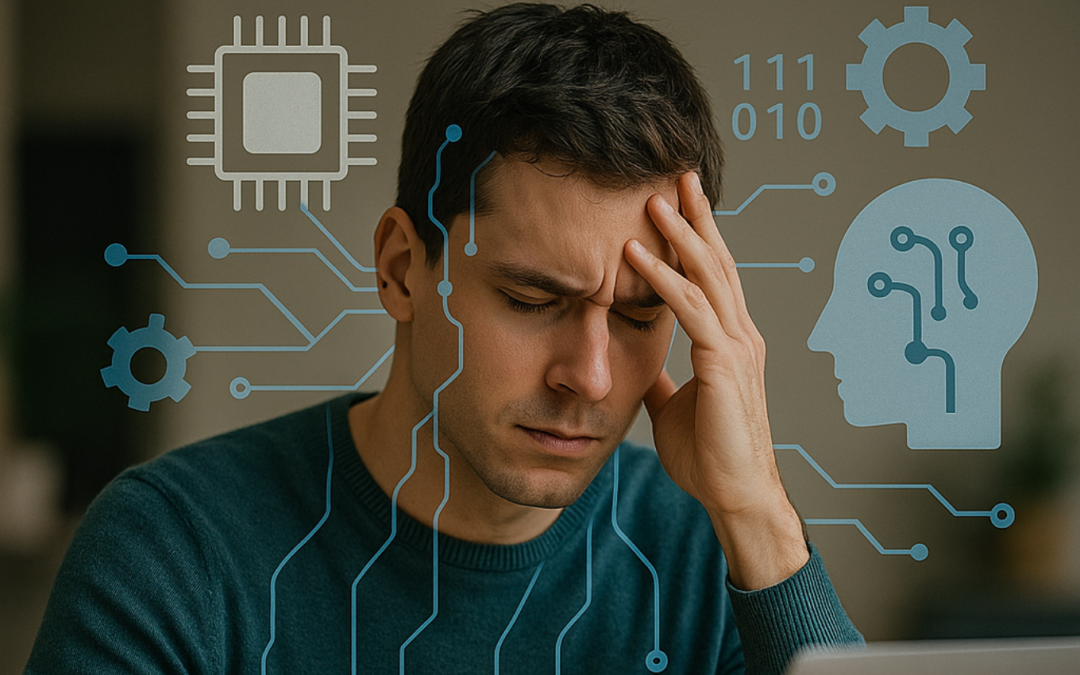
Artificial intelligence (AI) is reshaping the modern workplace in significant ways. In 2022, nearly half of the surveyed companies reported using AI technologies in some capacity, particularly for automation and analytics (Nature 2025). Tools like ChatGPT have fueled rapid adoption, offering new efficiencies in workflows and data processing. AI can help reduce physical strain through automation and free employees from mundane administrative tasks. For instance, AI “digital scribes” and automated billing systems allow professionals to concentrate on more meaningful work (TinyEYE 2024). Similarly, AI wellness apps such as Calm, Headspace, Wysa, and Woebot provide personalised mental health support, while predictive analytics can identify early signs of burnout, prompting timely intervention (Global Wellness Institute 2024).
A study involving German workers found no adverse effects of AI adoption on mental health. In fact, health outcomes slightly improved due to the reduction in physically demanding tasks (Nature 2025). However, the rise of AI also introduces new forms of “technostress,” as employees may feel compelled to learn new tools or fear being replaced by machines. This stress is often categorised into techno-overload (increased pace of work), techno-invasion (feeling always-on), techno-insecurity (fear of job loss), and techno-uncertainty (coping with ever-changing tools) (Budhwar et al. 2024). Without a human-centred approach, AI can intensify stress and burnout among employees (Budhwar et al. 2024).
Mental Health First Aid in an AI-Driven World
Regardless of technology use, the fundamentals of Mental Health First Aid (MHFA) remain vital. MHFA teaches a simple action plan called ALGEE:
-
A – Approach safely and assess for risk.
-
L – Listen non-judgmentally.
-
G – Give reassurance and information.
-
E – Encourage professional help.
-
E – Encourage self-help and social support (MHFA 2021).
For example, employees might express anxiety over AI implementation or workload changes. MHFA encourages peers to provide a safe, empathetic space to discuss these concerns (Tang and Company 2024). The goal is not to diagnose or fix, but to support and refer. Research shows MHFA-trained individuals are more confident in recognising distress, reducing stigma, and supporting others (Tang and Company 2024).
The Power of Connection and Community
Social connection is a proven buffer against stress. Research from the CDC and the U.S. Surgeon General confirms that strong workplace relationships are associated with better health outcomes and increased longevity (CDC 2023). A sense of belonging improves employee engagement, resilience, and purpose, all of which help guard against burnout (WebMD 2023). Workers who feel connected to colleagues report lower levels of anxiety and depression.
By contrast, isolation—especially common among remote workers—can lead to disengagement and absenteeism. In fact, loneliness costs U.S. employers an estimated $154 billion annually in lost productivity (WebMD 2023). Thus, building a workplace community is essential. Strategies include regular check-ins, mentorship programs, virtual coffee breaks, and inclusive social activities. Leadership also plays a critical role by modelling empathy and encouraging open communication (CDC 2023; Global Wellness Institute 2024).
Recommendations for HR and Employees
To create balanced, healthy workplaces in the age of AI, organisations must adopt strategic, human-centred practices:
-
Communicate AI changes openly, using Q&A sessions and transparent messaging to reduce fear and uncertainty (MHFA 2025).
-
Provide training—both technical and mental health support, such as MHFA certification, stress-management resources, and access to wellness apps (Global Wellness Institute 2024).
-
Support compassionate leadership, equipping managers to detect burnout and encourage healthy boundaries.
-
Use AI responsibly, such as deploying AI to monitor workloads or guide employees to resources, while maintaining privacy and ethical oversight (Global Wellness Institute 2024).
-
Invest in social connection, offering mentorship, team-building activities, and policies that promote flexibility and inclusion (CDC 2023).
Employees can also take initiative by upskilling, accessing wellness programs, practising MHFA with peers, and cultivating personal workplace support networks.
In conclusion, while AI introduces powerful efficiencies, it also challenges well-being. Organisations that blend smart technology with mental health awareness, empathy, and connection will be best positioned to help both their people and their innovations thrive.
Bibliography
- Budhwar, Pawan, Kamel Mellahi, and Ashish Malik. 2024. The Mental Health Implications of Artificial Intelligence Adoption: The Crucial Role of Self-Efficacy. Humanities and Social Sciences Communications. https://www.nature.com/articles/s41599-024-04018-w.
- Centers for Disease Control and Prevention (CDC). 2023. “Social Connection and Worker Well-being.” NIOSH Science Blog. https://blogs.cdc.gov/niosh-science-blog/2023/11/20/social-connection-and-work/.
- Global Wellness Institute. 2024. “AI’s Role in Enhancing Wellbeing in the Workplace and Beyond.” https://globalwellnessinstitute.org/global-wellness-institute-blog/2024/05/07/ais-role-in-enhancing-wellbeing-in-the-workplace-and-beyond/.
- Mental Health First Aid (MHFA). 2021. “ALGEE: How MHFA Helps You Respond in Crisis and Non-crisis Situations.” https://www.mentalhealthfirstaid.org/2021/04/algee-how-mhfa-helps-you-respond-in-crisis-and-non-crisis-situations/.
- Mental Health First Aid (MHFA). 2025. “Making Workplaces Healthier: Ideas and Innovations for a Better Work Environment.” https://www.mentalhealthfirstaid.org/2025/02/making-workplaces-healthier/.
- Nature. 2025. Artificial Intelligence and the Wellbeing of Workers. Scientific Reports. https://www.nature.com/articles/s41598-025-98241-3.
- Tang and Company. 2024. “Mental Health First Aid: A Tool to Support Employee Mental Health.” https://www.tangandcompany.com/mental-health-first-aid-better-identify-understand-and-respond-to-mental-health-at-work/.
- TinyEYE Therapy Services. 2024. “AI: A New Ally in Combating Burnout for Speech-Language Pathologists.” https://tinyeye.com/blog/ai-a-new-ally-in-combating-burnout-for-speech-language-pathologists.php.
- WebMD Health Services. 2023. “The Importance of Social Connections in the Workplace.” https://www.webmdhealthservices.com/blog/the-importance-of-social-connections-in-the-workplace/.